



Watch the episode
Listen to the episode
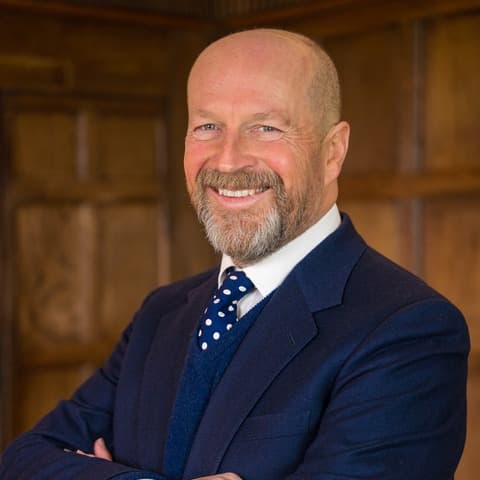
In this special 100th episode of all about business, James sits down with entrepreneur Cath Kidston MBE, who built a single shop into a globally recognised brand, watched its values slip once investors and private equity got involved, and has spent her second business, C.Athaly, making sure it never happens again.
Cath breaks down why she believes founders need to define their brand values early and write them down, long before growth, investment, or pressure to cut costs ever arrives.
She explains how her first business began compromising on quality once money and new voices entered the business, and why a gut-instinct decision she couldn't justify on a spreadsheet turned out to be the right call all along.
The conversation also unpacks why building slowly and deliberately is better than scaling too early. Cath explains why she spent four to five years getting the foundations right in both of her businesses before pushing for growth, and why she believes it's nearly impossible to fix a business's culture or values once they've already slipped.
Timestamps (Video)
03:13 C.Atherly origins
10:55 four signature scents
16:59 building smarter this time
28:06 naming your business
34:17 brand values no compromise
40:52 hiring ops to scale
45:09 modern marketing and property
Timestamps (Audio)
01:46 C.Atherly origins
08:55 four signature scents
14:59 building smarter this time
26:06 naming your business
32:17 brand values no compromise
38:52 hiring ops to scale
43:09 modern marketing and property
Follow James Reed on LinkedIn:https://www.linkedin.com/in/chairmanjames/
Find out more about C. Atherley and their products here: https://c-atherley.com/
Find out more about Joy of print and their products here: https://joyofprint.co.uk/
Submit your application to Reed’s Entrepreneurs Fund for a chance to win a £20,000 grant: https://www.reed.com/entrepreneurs
[00:00:35] Well, today on All About Business we have a very special episode. This is our 100th episode of All About Business, the podcast, and we have a very special guest. I, I couldn't be more delighted than to welcome an exceptional entrepreneur, um, a serial entrepreneur, a- and a friend and neighbor, Kath Kidston.
[00:00:56] Thank you for coming in, Kath. It's very nice to see you. You're very [00:01:00] welcome. Um, I think the be- the best way to start is, please could you tell me what you're doing these days? I mean, in front of us, for those who can't see, we've got a s- some beautiful plants. Um, the studio smells fantastic, Kath- Great
[00:01:15] with these new fragrances you've brought. Yeah. And, uh, and other product. Yeah. So please begin with, um- Okay ... your- Well, first, yeah, thank you so much for inviting me along. It's a real pleasure. Lovely to... For the 100th episode, it's fantastic. Yeah, we wanted to make it a good one, Kath, so. Um, yeah, I'm, I'm back at work.
[00:01:31] I'm, I'm, I, I, it's very nice of you to call me a serial entrepreneur. I'm basically addicted to ideas and, and, um, and I love the sort of process of building businesses. So having left my old company back in 2016, I gra- gradually began to creep back into work, and I now have a body care, bath and body care business called C.
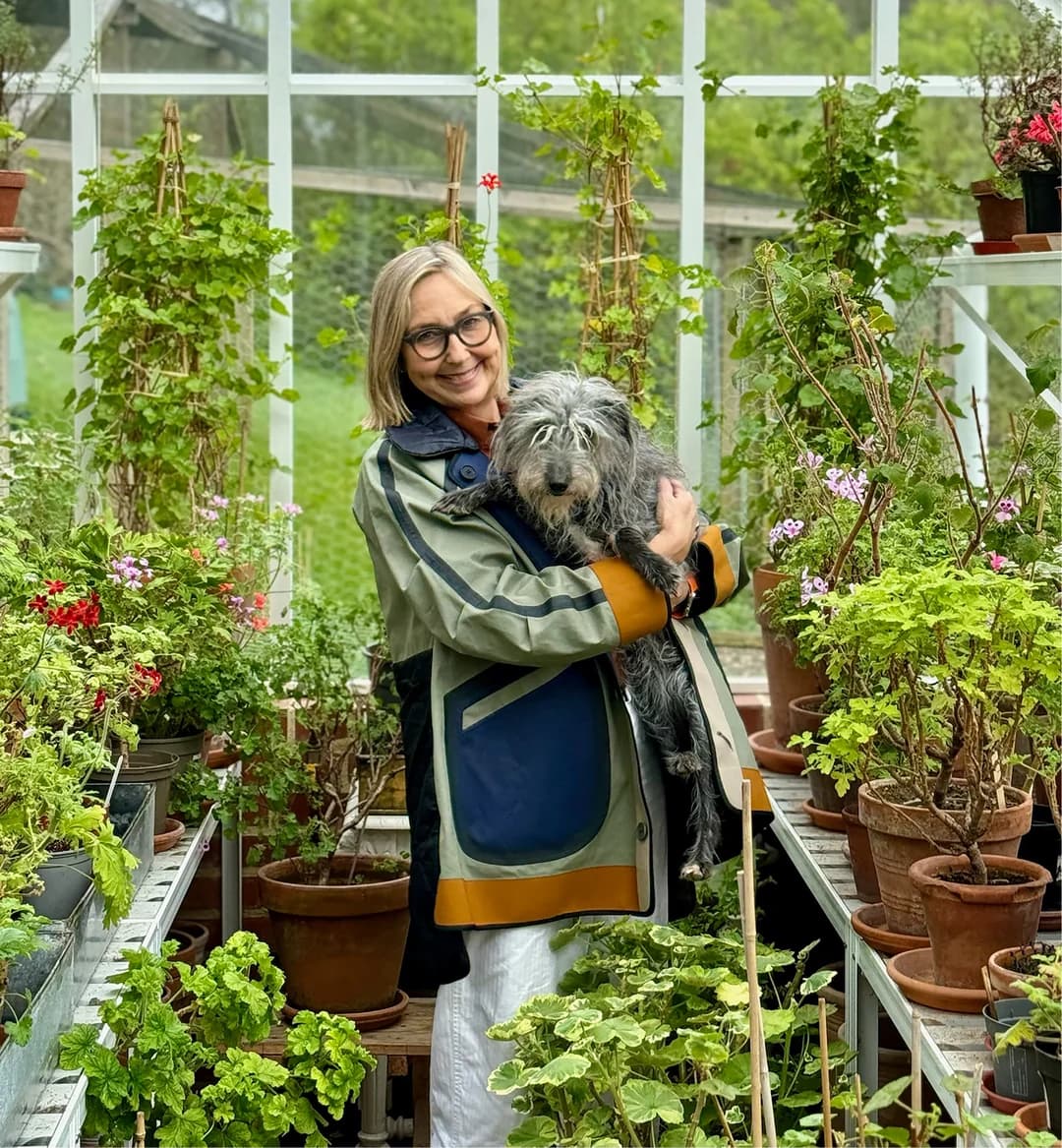
[00:01:56] Athalie, which is family name, [00:02:00] and it's totally inspired from my greenhouse at home and this extraordinary, um, plant, scented leaf geranium, that carries so many different fragrances. So I've been kind of building a business- Hang on. You've got a problem. I'm so sorry to cut you. It's just we can't hear you perfectly.
[00:02:17] Okay. If you wouldn't mind sort of going- So if I want to talk to James- Yeah ... can we put it there? Yeah, yeah, yeah. Yeah. It's easier to chat. Mm-hmm. Do you want me to start again? 'Cause I want, just want to check the, um-
[00:02:30] Over there Over here? Sh- shall we, shall we- And then- Shall we start again? Yeah But yeah, just sort of, not sort of there. This way, you know what I mean? To the plant. Look at, just look at, just look at me, yeah. Just look at you. It's easier. Yeah, that's fine. Um- So I'll, I'll start again. I love your addicted to ideas, so please say that again.
[00:02:44] Okay. All right. Tell us. So, um, yeah, okay, we'll start again. Take two. Do a take two, Will.[00:03:00]
[00:03:00] Well, today on All About Business, it's a very special episode with a very special guest. Um, it's our 100th episode of the podcast series, and we have one of our most exceptional serial entrepreneurs- ... as guest today, uh, the wonderful Cath Kidston. Thank you so much for coming in to talk to me, Cath. I'm so looking forward to our conversation.
[00:03:22] You are very welcome, and I'd like to start by asking you a, a very simple question. Uh, y- what are you up to these days? So James, I, I, I, I retired in 2016, and it didn't take me that long to get the itch. I mean, I'm just ... I am c- I absolutely love this, um, this thing of founding an idea. I ... Can I start again?
[00:03:47] Yeah, yeah, yeah. I forgot what I said. Yeah, yeah. What did I say? You said you, you said you were addicted to ideas. Okay. Okay. So, um- I was gonna ask you what that meant, so yeah. You got- Can we, can you cut this to that? Yeah, yeah, yeah. Yeah. Um, so James, having left my work in [00:04:00] 2016, I realized that I'm actually addicted to work and ideas, and, um, it really didn't take me long to start planning and thinking about what I would do next.
[00:04:11] And I founded a business which is very close to my heart. It's a ch- a, a body, bath and body company called Sea Athaly. We make beautiful fragrance, um- Bath oils, hand creams, candles, all that kind of thing, inspired by this beautiful plant, the scented leaf geranium. And it's something I have a big collection of at home, and I was surrounded by them in my greenhouse, and it was that sort of...
[00:04:38] You know, when you start an idea, you get a trigger, and from the moment that I sort of began to thinking about making a business around this beautiful product, this beautiful plants and everything, it took me three or four years really for it to come to fruition. So you've said a lot there that I'm sort of intrigued by, but I'm, I'm sitting here, and for [00:05:00] those who, who can't see the studio, we've got some geraniums in here, which I can smell.
[00:05:04] I mean, those fragrance is incredible, I would say. So, so you mentioned, Kat, that you, you said you were addicted to ideas, and then you, you were sort of triggered by the smell of these geraniums. Yes. I mean, how did that, how did that actually happen? Were you sitting in the greenhouse and suddenly thought, "I want to do something with these plants," or was it a more sort of- No, I'd spent time, particularly in the pandemic.
[00:05:27] Right. So I'd been growing the plants and spent time. But here's the thing, that all my life, even from when I was a very small child, I would get ideas of things I wanted to sell. So I was the kind of kid, when I watched Blue Peter, and it said, "Make this out of whatever and do it," I would make it and plan how I would sell it.
[00:05:47] Right. And so I would like... I remember, for example- What were the first things you made? Okay. So I took, um... You know, it's things like painting rocks. You know how kids do that kind of thing- Yes ... then sell them. But I've had these snail shells [00:06:00] in the garden at home, and I added felt ears and painted faces on them and tails.
[00:06:05] And lay them out on a tray Right And I think that was the first thing I smelled How old were you then? I must have been, I'd guess, what would I have been? Six or seven. Right. I don't know, that kind of age. And then, um, I went to stay with my aunt in the Isle of Wight, and we'd ... I'd been brought up in the countryside, and she had a house in Bembridge in the Isle of Wight that had pavement and passing trade
[00:06:28] Oh, right. I'd never had passing trade before. She went off to work. So you liked the look of that. I literally said... I made my cousin, we picked her vegetable garden, and it wasn't ripe. It was, like, green strawberries or whatever. Lay them all out on a tray. We're charming to everybody that walked by, and we made a pound, and she was so cross when she came home.
[00:06:50] But it, basi- You'd picked all her strawberries a bit early Yeah. But I don't know where the- But that was the start of your career Yes So- Um, but the d- the thing of the idea of the geraniums, [00:07:00] it's, it was a mood and a feel when I was in the greenhouse with these beautiful fragrances, and I began to get interested in thinking, how could I capture...
[00:07:10] I was thinking about wanting to do a new business, so obviously I thought of all sorts of ideas, and, um, I w- it was, you know, once I get an idea, then have to kind of visualize how... You have to visualize the whole picture, how it's gonna come alive. Will the jigsaw puzzle fit of the idea? And it's the kind of thing I would think about, say, in the bath or going for a walk.
[00:07:35] It wasn't to the fore, but I was beginning to formulate an idea. And once it began to come together, I was really excited by the notion of it. And so then it's about, for me, always a very visual thing of actually creating drawings and visualizing and thinking about how something could translate, and realizing kind of how I could maybe connect to a customer [00:08:00] with the mood and feel that I had.
[00:08:03] That would be quite an exciting prospect. So you're the sort of... I don't like the word much, but ideation, it gets called- Yeah ... the sort of development of ideas. It, is, is that something that for you is quite a singular process, or did you involve other people? Did you, you know, as you developed this brand- Well-
[00:08:20] C. Atholley- Yeah ... and the scented geranium products? To begin with, it was quite... It was just myself thinking about it, and then I have... I had a little print studio, 'cause I, for years I've designed print for other big companies. Not with no name, but I designed print because I love print and it's something that I enjoy doing.
[00:08:39] And I had... So I had the studio and the graphic designers and things, so I could get the... I would sketch out what I wanted and start visualizing it. But here's the thing. When I, when I started my Cath Kidston brand, I began it, I had this really clear vision in my mind. When I went to a car [00:09:00] boot sale, which I did in the early '90s, or I went past a house clearance shop or that kind of thing, when I arrived at the car boot sale, I would have this absolute perfect moment of happiness, thinking, "What am I gonna find?"
[00:09:15] I'm going to go into this kind of environment and I could find the most magic thing I've been looking for. It was like a kind of moment of pure happiness. And I thought, "If I could capture a moment-" The car boot sale. Yeah. You just love car boot sales. I used to go to the car boot sale in Gloucester. Oh, good.
[00:09:28] I, th- th- this is- It was amazing in those days ... perfect And find these treasures. Um- So that was what made you happy ... that, but I thought- Yeah ... that happy moment, if I can create a shop that when people walk in the door, they get that feeling, what might they find? Right. And all the things I was playing, was collecting then and looking at then were amazing things that triggered memory So that's always been something that's very powerful to me.
[00:09:54] If you can capture customers' memories and how they feel towards [00:10:00] things, it's an amazing connection to what... If you're selling stuff that relates like that. So you just said something that really struck me. You were selling a f- feeling. Yes, I was actually. It wasn't- Yeah ... it wasn't prints or, you know. No, it was, it was really- It, it was a feeling
[00:10:15] it, uh, ultimately it was a feeling, and it was what made people feel happy, safe, comforted. You know, the... It's amazing the feedback I get still to these days of h- it's always how the product made them feel. Right. It's incredible. And so having- Sort of work that out in my mind, I had this feeling in my greenhouse- Oh
[00:10:40] and these extraordinary plants and these fragrances. And to fast-forward now, I have a little shop with the products, and I've created it so it feels like walking into the greenhouse, and I absolutely love s- seeing people's whose- So, Cath, sorry to interrupt you, but where is this shop- ... and how do people find it if they want to have this feeling?
[00:10:58] Uh- Okay, so it, [00:11:00] uh, so Sea Atelier is online, and it's also a little shop in c- in Connaught Village in a place called Porchester Place. Different stockists all around the country. That's in London. In London. Just off the Edgware Road, is that right? In W- in W2. Near, nearest- Just behind Marble Arch ... nearest station Marble Arch.
[00:11:15] Marble Arch, just behind Marble Arch- Yeah, so easy to find ... in Porchester Place. But it's this thing, it's exactly the same process. It's, it's me being enchanted by a mood and thinking there's something about this that's very special, and how can I convey it? And in within that are all the fragrances. And do you know so many people come in who understand about plants and things, and the fragrances give them memories.
[00:11:41] They said, "This reminds me of my grandmother or my aunt," da da da, or that. Well, smell has that effect, doesn't it? Smell has that effect. It goes straight into the brain. Yes. Takes you somewhere else immediately. Exactly. But the notion of building a business, and I didn't do a spreadsheet. I didn't do anything to start with.
[00:11:57] Mm. I w- once I got- That's very refreshing. No. [00:12:00] For me, I have to think how would the idea work? How would I connect and have... Could I make the right amount of product to make a business? How could I communicate that to the customer? How could I get the right price points with what I'm doing? So I work everything out, but after I've got the concept there to make it feel that, you know, I can then build from that.
[00:12:21] So there's a foundation and an idea. Right. And then everything else gets costed up and done. So in front of me we have some lovely geraniums- ... that I can smell, but also some products- Yes ... that, um, you, this idea has sort of, uh, given, uh, to the world. Uh, what are they, Cath? So I, so I, here, here, here, I've brought you in four plants.
[00:12:44] Right. They're four, four different scented geraniums. One called Radnor, which has a very... All of them have a very green, leafy-based smell to them, but the first one near you is a kind of very classic scented leaf geranium which is a mixture of [00:13:00] rose leaf, uh, rose, mint, lemon, all sorts, and it's very uplifting and kind of anchoring, that smell.
[00:13:08] The one next door is a very earthy, strong mint fragrance which is a kind of thing that is great for in the shower, for different mood. Mm. Very sort of very clean and, and bright. Then there's a very clear, it's almost like sherbet lemon, citrusy one, which is great for summer, great for that kind of outdoor gardeny anti-mosquito feel, but also very nice kitchen fresh lemon smell.
[00:13:38] And then the one nearest to me is rose geranium, which is a very delicate, beautiful smell, which is, is more kind of what I call bathroom. We make face oil with it. It's, it's a very feminine, beautiful smell, the rose one. But they each have a different purpose. And so we've built a brand [00:14:00] around four key fragrances to begin with.
[00:14:02] There could be more, but actually I like the four- Based on these four plants. On the four plants. Yeah. And, and the way they've been done is usually with fragrance, when I used to work with fragrance in the old days, you'd, you'd go to see the, um, producer and say, "I want a geranium fragrance," or whatever it is, or, "I want a, this type of mood- Mm
[00:14:20] of fragrance. And these I wanted to feel really authentic to what they were in the greenhouse. So I grew the plants, went to see the apothecaryist, and he would work directly off the leaves So what I bought you is, um, it's probably not suitable to do it now, but I'll leave them with you. There's, like, the four hand creams which, which cover the four fragrances to match back to the leaves.
[00:14:46] So customers come into the shop, and they can rub the leaves, try the fragrances, and get this very close connection to the plants. Right. And decide which ones they like. Yeah. And we've rolled that out in the West End in Fortnum & Mason [00:15:00] at the moment- Right ... with people able to... It's quite hard to maintain, going in to do gardening with everything.
[00:15:06] Fortnum & Mason, yeah. But- Gotta look after the plants. Yeah ... uh, it's, it's really ex- really fun and really exciting, the customer reaction to products like that. I mean, what I... I mean, I'm s- forgive my ignorance, but I always associate flowers with fragrance, but these are leaves. Exactly. I see. And so that's one of the sort of peculiarities.
[00:15:23] I mean, there are a number of, of things, like, say, rosemary or whatever. Mm. We all know herbs have fragrant leaves. Sure. And, um, geraniums, the, the scented leaf geraniums have very small flowers, and it's mainly all in the leaves. Right. No, that's very interesting- Yeah ... to me. So you, you, you mentioned that other stores are now stocking your product.
[00:15:40] Yes. I believe you've expanded to over, a- a- around 100- That's right ... outlets. I mean... Yes, through... And also really beautiful, um, we've-- we want the product to be with people who really, um, ha- curate their shops- Right ... and really, and really give it space and so on. [00:16:00] And so most of the people who stock the products are owners, owner, owner, sole traders rather than, um, multiples and everything, apart from online things.
[00:16:12] And it's, so it's really lovely seeing it grow, particularly in America, where there's these amazing independent stores, really beautiful. Um, there's maybe 30 stores we've got out there with-- They have the space- Right ... often to have the plants and things like that. So you can get your products in America.
[00:16:30] So you can get the products into... Yeah, we can ship to America, which is great. Um- And you can get them online. Get them online. What's the URL if you want to get them online? What's the address? It is... So you go to ke- um, catherinelondon- Is it- ... I think .com C- Catherinelondon. So being dyslexic, I'm sitting here- Sorry
[00:16:49] thinking, "Hold on a minute. Have I got that one right?" Well, I'm sure- Basically, if you put Catherinet in, in London, the website will come- It's interesting you say you're dyslexic. I mean- Yeah, I'm completely dyslexic. Are you? Uh, no, I'm not completely. Um- So has that [00:17:00] become a superpower? I think it's been a help for me now I know my limitations So how's it helped?
[00:17:06] Yeah 'Cause, uh, i- it's not, it's not unusual for people in, uh, you know, our guests to say that I know. Isn't it... It's so true, isn't it? There's- So many entrepreneurs seem to- Yeah ... say that I think I, I try and compensate. For example, something like maths, I can work maths out visually. So if I, if I'm doing a fraction, I just picture a cake and chop it up in my- Mm
[00:17:26] own mind, and get pretty close to the percent like that. Whereas if I did something like algebra, I'm completely lost 'cause it was never explained to me. Right You know, so, and I could do any subject I could visualize. So you, so you're very, your thought processes are very visual. Certainly. Which is, yeah.
[00:17:43] Yeah. And, and you don't do spreadsheets. Do you write? I write, if I have, if I'm working out, like when I was building the business, I would sketch out the plans, or I'd jot down notes, and I can get rid of the piece of paper afterwards, but it's how I focus and, and get the idea in place on a piece of paper.
[00:17:59] Yes. [00:18:00] Um, and I need that to kind of anchor, anchor me. I do that. I always- I always have a notebook- Do you? ... and I write things in it. Yeah. And I don't necessarily- Exactly ... look at them again, but it helps me absorb stuff. Exactly the same. Right. Yeah. No, that's interesting. So, um- I, I'd, I'd like to ask you this question because, I mean, you, you, you're doing this serial entrepreneur second time around.
[00:18:21] I mean, you, you left Cath Kidston the business I think in 2016. That's right. Um, and then you went it- onto do your Joy of Print business- Yes ... which you've mentioned, and, uh, then launched See Athly I believe five years ago. Yes. Um, what made you want to do this? I mean, what, what, why didn't you just retire at your lovely greenhouse?
[00:18:42] And- ... what, what made you wanna get back into the thick of it? And- I think- ... what's going on here, Cath? Yeah, I mean- 'Cause a lot of people imagine, you know, the very successful entrepreneur, I'm, I'm imagining she bought a boat or a- Yeah. No, I m- ... a place in the country and is, and enjoying life. What's the- I, I did a bit of that.
[00:18:56] We got a house in the country, so that kept me preoccupied a little bit. [00:19:00] Oh. Um, it was, it was a... I left, when I left in, in 2016, I thought I'd be one of those women who go out to lunch. Oh. I thought, "I've never done that, and I've never-" "... gone to the cinema in the afternoon, and I'm gonna do all-" Right. So you were excited by that prospect?
[00:19:15] Yeah. I thought, "Okay, this is-" Yeah ... "gonna be a whole new chapter." And then I realized, actually what I love doing is going traveling, going to museums and exhibitions. I love looking at things, you know, going to see things. And the r- I realized, it was quite a kind of depressing moment when I realized this, that why I love, say, going to an art gallery is to get inspiration and ideas, and then I had nowhere to channel those ideas.
[00:19:41] Oh. So since the age of when I was six or seven and making the mice and selling them, I've worked like that. That's my whole DNA- Right ... is I'm excited- So half of that was missing. Yeah, and I- Right ... I felt like I just didn't have... I felt completely lost without being able to [00:20:00] develop something. And I could have stayed at home and thought, "Okay, I'm going to try and design a garden or go and do a sculpture course or do that kind of thing."
[00:20:09] But I tell you what I think it is, is when you have a, a business like mine, you build a community, and I absolutely love the community I've got with this See Athly business. And whether it's through Instagram, through the partners who have the shops that we work with, the people I work with who are well under half my age, there's this amazing, amazing setup that I find far more intriguing and fun than, as much as I love my friends- Yeah
[00:20:38] going out to lunch on a Wednesday or something. Yeah, well, it, it sort of- And it's like problem-solving, hearing all the feedback and things. Sorry. And, um, you know, all that kind of excitement of building something. I would really miss that if I didn't do it. So it's partly the social side of working. It's the community- I love that.
[00:20:58] I find it- ... and the ideas ... [00:21:00] yeah, it's so interesting and always learning things and, and coming across sort of- Always, always new things happening, which I love. Absolutely love it. So, so I mean, you obviously built a globally recognized brand, um, bearing your name. How differently are you approaching Siâthelie, the, the task this time?
[00:21:22] Is it some- Do you have different ambitions for it? So the one, the one thing I did do, I compromised with my husband . Right. And I promised him I wouldn't have a warehouse, 'cause before when I was ... W- in the early days, the first decade of having the Cath Kidston business, it was really seriously hard work, and it was growing quite quickly, and having to manage things like a warehouse closing down, da, da, you know, all the engine of the business.
[00:21:48] And the- That was the warehouse ... well, it could be a warehouse, it could be whatever, but the engine of running a business was massive in that period. And I was- So in making that promise, sorry, what? So I made that promise to Hugh that I [00:22:00] would get involved in a business, but I wouldn't get involved in the engine of the business so much.
[00:22:05] Right. And so what I've done in this instance is I have very old friends who have, who are long-term partners, who actually make ... They do all the manufacturing for me. They do the warehousing and the distribution, which is a fantastic thing for me because they do that for other similar businesses. They have a company making all body care and amazing- Right
[00:22:27] stuff. And so I don't have to get involved so much in all of that, and I'm driving the creative, the, the product direction, the marketing, all the sides that I really love the most. Um- I see. That's clever. So you, you've sort of outsourced some aspects of running a business. Yeah, so I share it. Yeah. Yeah, you share it.
[00:22:44] I share it, um, with a, in a kind of license arrangement in this instant- Right ... of how we work together, but because I've known this lovely family, um, Dennis and Lesley Aronson, for very many years, I knew them before I started the [00:23:00] Cath Kidston business. Right. We go back such a long way. There's a wonderful trust and a feeling of kind of like running a family business- So where are they based?
[00:23:09] and working together. They're based up in Queen's Park- Right ... and their warehouse is up in the Midlands, you know, different things. So they have a whole kind of infrastructure behind them for sourcing- Right ... which is, you know, rather- So that's given you a, a sort of more- So that's, that's allowed me ... You know, I'm 67.
[00:23:26] I have gra- a grandchild now. I have other things going on as well, but I do love ... I work pretty much every day. Yes. But I don't have to be sorting out things like the warehouse. Yes. And when I look back, I th- I know that my strength in my old business was creating, hopefully, that mood and feel and connection to the customer That was the hardest thing to pass on when the customer, when the, when the business became bigger- Yes
[00:23:56] and investors came in. 'Cause when, if you create a business [00:24:00] based on mood and feel, and I would be very close to, say, my sales by line and know exactly what was selling and what wasn't as well, it's very difficult when it gets driven by more just profit and loss to keep that emotional connection. So you go- Yeah
[00:24:16] 'cause obviously you started similarly with one shop. Yeah. This was in Holland Park- Exactly ... wasn't it? 1993, I think. Yeah, it was. Exactly. So, uh- Um ... long time before. So you have felt that closeness to the customer then? Very much so. And it, it, it always helped, but when I started this business I have now, I have an office in the back, and I can- Right
[00:24:37] hear what the customers are saying through the door. Yes. You hear, like ... It's fantastic customer research, sitting while I'm doing whatever it is. Yeah. You know, but actually being close to the customer when you found a business really helps, I think. And obviously online nowadays, and so much happens of, you know, a large part of our business is online.
[00:24:55] You still hear, but less customer feedback. Mm. So it's [00:25:00] interesting how, how one kind of keeps that connection. So it's very important to have a physical shop in a sense- Yeah ... where people come in and you can hear them- Yeah ... asking questions- Yeah ... talking. But also with the- Feedback ... with the, with the wholesale and the partners, hearing from them and having a good dialogue with them, and hearing what's working, what isn't, understanding, and getting all that feedback is really invaluable always.
[00:25:22] So yeah, so the, the, the... It's often underestimated, isn't it, or underrated the importance of suppliers or partners. People overlook- Yeah ... that, I think. I think they're so important, and it's like what we're trying to do is do sort of, like, focus. We ha- we're just realigning how all our sa- sales team operate to get closer and be able to visit more and understand how everything's going on.
[00:25:44] Right. Yeah. So, so w- with the Cath Kidston business, you know, that, what's, what's the sort of trajectory that took from 1993? 'Cause it ob- I was in Tokyo recently, and there's a very prominent Cath- Yeah ... Kidston [00:26:00] brand there. Yes. It seemed very busy. I mean, what, what was the- It- But you're not involved I know, but- No, I can tell you.
[00:26:05] I mean, it started- What was the- ... off with the one shop. Yeah. And to, and to build the business, I used to run an interior design business alongside, and so I was working. It took me about four or five bus- years to get that business off the ground. It, it doubled each year, but I was self-funding, and I didn't take any loans out.
[00:26:23] So I built it, and then suddenly it began to bubble up, and I remember opening a second shop and thinking, "This is maybe a step too far." Where was that? It was in Chelsea Green. Right, okay. I, I had this notion of, of being in really nice neighborhoods- Yeah ... but in quieter streets that you could af- where I could afford the rent.
[00:26:40] Yeah. That had a community feel. So when I opened in Holland Park, it was next to the post office. Yeah. There used to be a long queue at the post office, um, and, and that was good for, for customers. Then Chelsea Green had the fishmonger and the vegetable shop, and kind of right in between King's Road, Fulham Road- Yeah
[00:26:59] busy cross [00:27:00] through. Then Marylebone High Street was very villagey then, but at the top of the M- of the High Street where I- Yes ... could afford the rent. And at that, and I think it took till about 2001 I kind of thought, "I've done the creative bit, and I've got the sense of this business going, but I can't manage another warehouse and another thing.
[00:27:21] I need to bring people in." And I was approached by investors. Right. So I sold part of the business then. Had a very difficult time to begin with because the MD who came in probably wasn't close enough to the product stuff. Mm. He's still a friend of mine. He went off into property afterwards. Right.
[00:27:38] Different, different thing. And then I got this lovely, most, well, fantastic general manager who became, um, CEO called Jo Staveley- Right ... who had built business before, and she was operationally really, really efficient. Fantastic person. And like me doing brand and she was doing operations, it was a good double act.
[00:27:59] It really was. Yeah. [00:28:00] And it took the business up to, I think Jo left when it was about 80, 90 shops. So you really exploded it- Yeah ... then at this point. It, it grew very quickly around the UK. And that was in the UK, was it? Yeah. No, also in Asia. Okay. So right from the very beginning, I had Japanese customers visit.
[00:28:17] Right. And, uh, what I did fairly early on, when the Japanese came, they always brought an interpreter with them, and this lovely girl Elspeth came who'd lived in Japan, who was their salesperson, so I took her on, so I had someone who spoke Japanese. Oh, that's clever. And yeah, it was amazing because- Yeah ... the, the CK business, I don't know how it is now, but it used to be bigger in Asia than here.
[00:28:39] Right. And so Thailand, South Korea, Japan, it was huge business, and they loved the quality and the English character, and they love things with a story and with memories. Well, they seem to be thriving- Yeah ... the store I saw. So I think it really is. So anyway, the business, by the time I left, it was, it was starting to have problems because it had expanded a [00:29:00] lot, and there'd been different private equity in and out, and I think they maybe, I think it's safe to say they'd lost a connection to the business.
[00:29:10] And a lot of it was things like we'd had Japanese partners who were very good, and they decided to take it in-house and run it themselves. And Japan is very complicated and very ... You know, that was- Mm ... that nearly brought the business down on its own, that decision. Um, it was a very complicated one. And when it got to that level, I thought, "This doesn't suit me."
[00:29:31] Right. You know, and I remember going to work one day, going upstairs. I w- w- worked on the third floor, and I'd always walk up the stairs in the morning and say hello to whoever was going up and down, and two people passed me who I didn't know, and they didn't know me, and they didn't say good morning and whatever.
[00:29:46] It's a different atmosphere. And I thought, "This isn't where I belong anymore." Right. "And I'm just gonna be fighting for product the whole time, and I'm gonna be a nuisance." Um- And I remember saying to the investors when the [00:30:00] last lot came in, "Do you think we should discuss the F-word before you , before you arrive?"
[00:30:06] And they went, "What's that?" I went, "Founder. You know-" Right ... we're really awkward as founders. The F-word. Okay. The F-word. I was wondering what that was. You know, the founder. The founder word- Right ... which is usually tricky when investors come in. Mm. And so I said, "Look, I'm gonna- I, I'm going out. I'm off. It's time for me to go."
[00:30:22] Right. And I stayed a little while on the board, but that was like, wasn't... And it's, it's no fun being on a board if you're, if you're used to being part of the decision making. But you, but you have this situation now where there's a company that bears your name. Yes. But it's not related directly to you.
[00:30:40] No, exactly. I went- But that, I mean, you've said to me before that this is complicated. It is very complicated because I went into it very f- very aware that I'd sold my name. What happens is when a name becomes a household name- It steps into different restrictions. It's much more [00:31:00] complicated- Right
[00:31:00] because obviously the last thing I want to do is pass off anything that would be Cath Kidston. Yeah. So I'm very careful of that. But I also know that when I had my exits and I got paid for my name and part of the business, nothing's for free. Right. And so what's good is, is what I feel very happy about is having had these kind of different investors coming in, and it was a turbulent, turbulent period for the business from 2016 to when it basically pretty much went into receivership in the pandemic.
[00:31:34] It's a fabulous thing that Next bought the business, because it really is one of the best run retail business- Next very good retail ... it is the best run retail business in the UK. Yeah, so they're now running it. It's amazing, and they turn over huge amount with it. They've made an enormous success of it, and I don't, I never look at what they're doing or what they're selling.
[00:31:52] It's like- No ... a different chapter of my life. But what I feel very sound about is I know they're running it beautifully, [00:32:00] and they use- Well, that's a good feeling, isn't it? It's fabulous. Yes. Yeah. And it... I feel very- So finally it's in a good place. Yeah, it's in a really good place. Yeah. And I wouldn't want to be working on that every day.
[00:32:08] So it was wonderful that that happened. It's very lucky that that happened, I think. It didn't- So they bought it out of administration or no- They bought it out ... yeah. And they've built it really in very few years into an enormous turnover again. It's fabulous. I was, I- Yeah. So that's very good, isn't it? I'm very pleased to hear that.
[00:32:24] So that's very good. Yeah, it's a nice story that. So, so, so this, this point about, I mean, people often call their businesses... I mean, our business is called Reid, but it's not Alec Reid or James Reid, it's just Reid. Yes. It's a bit more generic. But yours is very specifically, or was Cath Kidston. Yeah. Would, uh, would you advise other people to do that or not do that, given your experience?
[00:32:42] Do you know, I'm always saying to people, "Don't do it." Don't do it. Because ... Don't do it because I tried to change, um, Cath Kidston when we were selling to the Japanese. Right. And I, I made all these lovely logos in a business called In-House something or whatever. Right. And the, and the name was quite a good name [00:33:00] for running off the tongue, Cath Kidston.
[00:33:01] They didn't want to change it. And I never expected when I had one shop to grow- So your parents gave you a good name, huh? It runs off the tongue. Yeah. Uh, I mean, here's- Yeah ... it's crazy, but when in 1993- Yeah ... you had to look names up in the telephone book. Sure. And I was dependent on my interiors business, so I thought, "Oh, I better have my customers look me up."
[00:33:22] And if I tr- I couldn't even, I wouldn't even attempt to explain that to my stepdaughter now. Right. But, um, it wa- it was important that, you know, when I needed my, my work to fund everything, people could find me. But I wou- I think definitely for people, I've just ... I, I chat a lot to young people setting up s- starting businesses and so on, and I always say to them, "If you can, get away from it.
[00:33:46] It gives you more options." But there's something wonderful about th- it being so personal in a, in an age when so much is digital and- Yeah ... feels remote, and it, you know, when it's someone's name, you know it's a person, and that's ... [00:34:00] Isn't that important? I mean, what you were talking about feelings. I mean, people have feelings.
[00:34:04] I think so, but I mean, I remember having a friend who had an estate agent called Craig and Davis. Right. And, um, his, his name was Hope Davis, and I said, "Who's the Craig?" And he said, "Oh, he died." Oh. He'd made up Craig and Davis, and it sounded just as personal- Yeah ... but it wasn't his name. And so I think, I think you can create with initials, with all sorts of things.
[00:34:27] So you can create- Oh, just invent a name? Invent a name. Right. Okay. So that, that would be your advice to, uh, um, Andy? No, I, no, I don't think so. I'm really with you that it depends what you're selling and what you're doing 'cause obviously some businesses don't want to have any personal connection. Yeah. But if you're selling, if you're, if you're working in, in product and all of that kind of thing, it is important to have- Yeah
[00:34:50] something behind it. So i- is there a- any other advice you'd give to your younger self, knowing what you know now at this stage in your sort of- Mm ... entrepreneurial journey [00:35:00] that might be helpful for other people just starting? Yeah. I think, I think to, to know one's brand values, to be really confident and clear about what the brand values are, and not to break them.
[00:35:12] Right. So w- what would you say they are now for your new- And so for me- ... venture ... it's the quality of what we're making- Right ... and the, and the, and the authenticity of what it is, and keeping it within, within that and, and never kind of compromising on product, and always trying to keep as authentic as possible as it can be.
[00:35:31] Yeah. And so that to me is really important. I mean, you can use synthetic fragrances and sell things for less. You can do all sorts of things, but I, to me, the value of this is to keep it authentic to the greenhouse. And in my old business, I think things did slip because when ... The trouble is when, when something is financially successful and there's money around, people are very tempted to follow the money.
[00:35:56] And it- Right ... and that's, that's good in many ways, but not when it breaks [00:36:00] brand values. Right. And I think it was safe to say that happened a bit at one period with the old company. And- So, so what were the brand values of the old company? O- originally, it was that the product had a kind of, it had a- And this sort of cheerful, uplifting quality and told a story on what it did, and it was nicely made and well, and had a kind of
[00:36:26] It was, it was good value and good quality. And I think the eas- you know, one of the things that private equity often look at is how can they just grow the margin. Yes. Stick with what they've got, grow the margin. So say for example, we had, um, mugs made by a UK company. I don't think they made them all in the UK, but they were very good at knowing about their china.
[00:36:48] When you license that out to an ... Or when you, when you license it, the, the licensee probably knows their business, they know what they're making. If you make your own mugs- Mm ... you don't know the trade so well, [00:37:00] and the quality slips, for example. So that's something that happened in that case then. And so, and that would happen repeatedly, or you- Mm
[00:37:05] you think, "Okay, I can get this made somewhere else," and people can tell. Can make it cheaper or so. Make some- It's like the shrinking sort of chocolate bar. Yeah. Buy the next and get it for- The shrinking chocolate bar. Yeah. Or just sort of thinking people won't notice if you do this or that, but actually always pushing and being on the customer's side.
[00:37:22] Right. You know, at the end of the day, you want the custom- to be on the customer's side, not to kind of, um, delude them in any way, do you? You want it to be- No, quite. Yeah. It's interesting what you say about when the money, when it starts becoming financially successful The spreadsheets appear, don't they?
[00:37:41] Well, it's like kind of bees to a honeypot, isn't it? Suddenly there's all different people coming, coming to pay attention to things. Yeah. I mean, there was ... I remember f- um, there was ... I was thinking this morning actually, and I d- I was wondering what we were gonna talk about. But when I, when we started growing shops and things, we bought [00:38:00] a shop in, this is a bit of a random anecdote, this, but we bought a shop in St Ives.
[00:38:04] And St Ives was a- In Cornwall? Yeah, was in Cornwall. Mm. Was a great place to have a shop 'cause it had obviously good summer customer, but it also has a community in the winter. It's not just a summer- Yeah, it's a wonderful place. I love St Ives, yeah. It's a wonderful place. Yeah, amazing place. But when we had a manager who was a local person to the, to the area, and I suggested that anyone who came in who had a local postcode should be given a discount, and I can't remember if it was 10 or 15%.
[00:38:31] Yeah. So they would shop all year round and feel part of the community. And the staff had a, had a budget that they could give to local charities if they were- Mm ... doing like a school fundraiser or something, 'cause they wanted, didn't want to arrive in St Ives- Mm ... we had quite a few shops at the time, as a chain who weren't gonna- Mm
[00:38:47] be part of the community. So fast-forward two or four years on, and the shop was profitable. We took a shop in Salcombe in Devon. Mm. And the new FD said, "Can you believe it? I've [00:39:00] discovered that we're giving all this discount out in St Ives to all our local customers." Right. "And think of all the money we've lost."
[00:39:07] Right. And I went, "Well, hold on a minute." What did you say to this guy? Oh. I, uh, so this is where I didn't have ... This is where I literally, probably why I'm not in the business anymore, I found it really hard to articulate that I emotionally wanted the customers on side. Yes. I wanted the people in the town to feel part of our, our business- Yes
[00:39:28] and so on. So anyways, Salcombe opened, no discount, less profitable, all the rest of it. So you felt vindicated by this? But it was this h- yeah, I did feel ... No, but also it's that, what I felt was, why couldn't I explain that properly? Right. And this is the problem with being an entrepreneur who does everything on gut instinct, and maybe it's part of my dyslexia or whatever, but I would struggle in the boardroom to kind of fight for where I felt what, what was on the right side for the business and the wrong.
[00:39:57] Right. Very hard to articulate [00:40:00] that when it's done on gut instinct. Yeah. I mean, so you, you... That's a very interesting observation 'cause I can see how that can happen quite- Yeah ... a lot in all sorts of businesses- Yeah ... when the, the, the- Um ... the sort of analysis- Yeah ... might suggest you shouldn't be doing that- Yeah
[00:40:15] or you would've made more money if you had. Mm-hmm. But actually- Was- ... the reality is the reverse. Yeah. You wouldn't have had such a successful business- I do ... there in the first place. No, I don't know, and sadly I'm none the wiser. And I don't know what to do. Well, you've gotta try things. Yeah. So Salcombe didn't get the discount.
[00:40:29] Salcombe didn't get the discount, and they don't... Well, well, we were with one of those sort of chains that came in. But it's just that I d- I think it was more profitable because of the discount if I'd run the numbers, and I should have asked him to. But, you know, well, difficult to gauge. But it's just that feeling of always the connection between whatever one's doing and the customer.
[00:40:47] When, when you, when you... Looking back, when you invited investment into the business to grow it further- Yeah ... I mean, you obviously had ambitions to build the business into something much- Yeah ... larger. Were you aware at the time that that [00:41:00] would change the culture of the company perhaps as much as it did, or the, the approach in the way you've just described?
[00:41:06] I knew it would, but I had an amazing bunch of people first time round, which a lot of individuals put money in, private individuals, and they... And because the business was on this very upward traject- trajectory, word- Yeah ... I can't say, um, no one interferes when it's, when the graph's going that way. When things are going well, yeah.
[00:41:24] Yeah. And it's when it starts to flatten that they, that the interference happens. But I didn't feel I had a choice 'cause I knew that I couldn't manage a business. I'm really bad at running things like, um, how do you set up a schedule for this or that, or how do you work out all the stuff, reviews. You know, the, all the detail of the business I cloud over But you go and find some other people to- I'm really bad at doing that But you need to- I want it to happen, but I can't do it So how do you, how do you deal with that yourself?
[00:41:54] Do you, do you ... I mean, you need to recruit people in- So I have a ops person Yeah I always have an ops person I was thinking you need a good ops person I've got an amazing [00:42:00] ops person now. I had- Yeah ... an amazing ... I mean, Jo who worked with was more than ops. Yeah She ended up, she was more CEO of things. But I know that I need someone who will put order in behind the ideas.
[00:42:10] Yeah. Yeah. So people who are ideas-oriented benefit from having someone sort of running the operations. I think so, but quite often you see that, don't you? Do they curate the ideas? Mm. Do, do they ... Did, did Jo at the time say, "Well, I think that idea is better than this one," or did you just get all your ideas through?
[00:42:26] What I love, what I love w- working with her is I really respected her judgment on commercial things, and she would say, "Do you th- Have we got to..." She'd say, "Okay, we only need to do six bags, not seven." Right "Which one are you gonna lose?" You know Right And then I would ... And then she says, "Well, do you think that one from history will sell more?"
[00:42:43] And we could have a really, really healthy chat about coming to a conclusion, which we both felt was right. Yes. And so that equal partnership was a fabulous way to work. So you, you've started this business, you know, 30 years later, um, the, the See [00:43:00] After the Eight. Is the, is the business environment very different now for someone- Yes
[00:43:03] starting a new business, do you feel, and in what way? Um, I think there's much more ... Obviously, obviously social media and online is f- is stronger, and so it's still building that connection through that. I mean, it's easier on social media than it is maybe online to ... You know, Instagram's a great tool for, for connecting.
[00:43:22] So you have that at your disposal, which you didn't back then. Yeah, exactly. So there's all those things. Mm. But it is, it's more competitive. There's much more out there Um, and, and so on. It's how do you keep ... how do you differentiate yourself? How do you stand out? How are you visible? All of that. But that's always been the case in a way.
[00:43:41] Yeah. I was very struck what you were saying about your property strategy, though, with, with the org- original Cath Kidston business- Yeah ... and the sort of neighborhoods you chose. Is it as important now to have a good property strategy, do you think? Yes, I think so. I mean, right now we took our shop because it's central to get to, just behind Marble [00:44:00] Arch, but it's a quiet neighborhood, and there was a pretty shop that wasn't- So you're doing exactly the same thing.
[00:44:04] Yeah. Oh. But this was really a slightly different this time 'cause I wanted somewhere that could be a window for the customer through social media as well as footfall. Right. And footfall is quite low in the neighborhood we're in. We get people coming and visiting specially. We've got neighborhood thing, but it would never be a high-turnover shop, but it gives me a place to see how the product works in a shop layout to create an atmosphere and build, and introduce the, the wider world to that shop, not necessarily walking through the door, you know, 'cause people come in, they photograph it.
[00:44:38] So being photogenic- We grab all the rest ... is really- So it's photogenic, but it, not just photogenic. Hopefully it captures the mood and feel of the brand. Yes. And so that spreads and shares, and I think we've got a lot of our US stock is through that window, through being able to show and articulate how it looks in store.
[00:44:56] Your challenge though ultimately is you can't do fragrances on [00:45:00] Instagram, can you or, or the smell at least? No, you can. You can- You can? How? You can if you articulate it properly. So how do you do that? Have you found- And actually I've just got this amazing girl. Ah. We're just, we've just been doing a big program of
[00:45:11] The thing I'm, I'm really bad at is writing the words that support the- So you describe the smell ... the aroma thing. So we describe or story- Like you did earlier ... but I've got someone very, very good at writing beauty stuff who's beginning to bring it all alive to us, so all of that. And of course we've got down your side are little oils with the fragrances.
[00:45:31] These ones. And we'll be ... And they really clearly, if you try something like that, they really clearly express what's going on. That can be put with words without a plant. Right. And it sort of ... And so you can put it, we could put it into, I don't know- Glory hole ... an airport shop and have the four clear fragrances with the descriptions and the words.
[00:45:49] It's quite strong, isn't it? It's great. It's nice, isn't it? It smells sort of lemony. It is great, isn't it? Yeah, yeah. Oh, yeah. I, I, yeah, I'm, I'm probably not the best- Yeah, no ... copywriter you could find. I'm [00:46:00] terrible at it, so. But I think I, I would say, yeah, it's very ... it smells fabulous. It... Thank you. Um, so now it's about thinking how do we roll out, which would be, obviously we d- I th- I, I really believe in, in building your foundation steadily.
[00:46:17] We need to fill our product range still before we've got complete sets of everything we do, 'cause it took a long time to get the fourth fragrance in place. We only got the fourth one earlier this year. But there's ... Obviously, I'd like to be in hospitality. I think the fragrance you've just smelt- Mm ... the number one, is very popular across the board.
[00:46:36] Would be wonderful to be able to put into that kind of, um, environment. When you say into hospital- what do you mean? So, like, in, you know, we, we put it in a couple of restaurants now and hotels- Right ... and so on, and I think just to be able to put it into those kind of arenas, and obviously to do that properly you need shampoo and conditioner, other things.
[00:46:55] Yeah, so have the whole set. Have the whole set. So we're looking at building out on that. [00:47:00] And then refills are really important but difficult for us to get right at the moment from a sustainable perspective. But to build and develop the refill program really well. These are the things we're working on at the moment, now we've got things.
[00:47:13] Mm. And so I'd say it'll be another couple of years before all those, all that core stuff is there, steadily building the whole time, before it's the time to really try and push and grow in the right, in the right direction. So when, when you, when you envisage pushing and growing, as you describe it- Yeah
[00:47:30] are you thinking more shops or doing main- mainly online or, or through other partners? I'd l- Yeah, I'd like to, I'd like to do shops, and I'd like ... but I'd like to do t- It's difficult to find small shops, but I think it would work, this environment, in small shops. Yeah. Like those beautiful arcades, you know- Yeah
[00:47:46] in Piccadilly, that kind of thing. Finding the right environment for shops. Maybe being in ... There are less department stores these days, but key department stores run ... but being able to run a space- Yes ... in a way that you're owning it and driving it how it [00:48:00] would work. And then online, the bigger online retailers in that industry, there's some amazing places to be.
[00:48:08] But to be in that setup, we want to make sure we've got everything lined up to do that. So at the moment, in sort of percentage terms, how, how, how, how are the sales split between online and retail? Is it- Our, our shop retail is tiny, but- Mm ... online and, and partners is about equal. Right. That kind of thing.
[00:48:27] Right. And so, so it's like, it's exactly how I did my last business in that it, it was four or five years before it really spread, but all that time trying to get everything right. 'Cause if you, if you set off too fast without the founda- foundations really set, it's very hard to unpick that, I feel. You can't go back- Yeah
[00:48:48] and do it again so easily. No. And then I- So getting the, the ... So you've got these four fragrances, like four corners of a building almost. Yeah. So it's like you're building up from there. Yeah, I like that analogy. I can- I can visualize that one. Yeah. I thought you'd like that. Four corners of a greenhouse.
[00:48:58] That, that's what I was thinking about. Yeah. Yeah, so your [00:49:00] four corners of the greenhouse.
[00:49:04] And, and that's enough, y- but y- you can fill in- Yes ... between those corners, you think? Yes, I, I really think we can. Yeah. And then there's obviously down the line opportunity to do more fragrance, but actually the four different moods these fill at the moment give us legs to do all sorts. There must be quite a lot of sort of science in terms of creating the fragrances and- Yeah
[00:49:24] smell. I mean, do you have a- It's, we have- ... chemist somewhere of- No, we have people who we work with, and obviously we, we create the core fragrance and are really happy with it, and then it has to be developed across the different products, and it alters for the different bases. So something like the rose fragrance, which is the most delicate one, that took four years.
[00:49:44] Right. It was so long 'cause we want... And again, it's like wanting to use... That's the only one that's got a very, very small, like, 1 or 2% of a synthetic fragrance in the rose 'cause we couldn't get the fragrance right without it. [00:50:00] Everything else has got 100% pure essential oils. So it's just sometimes having to do that in order to get it to match the, the product.
[00:50:08] Right. So that took four years? Yeah, because it, it... 'Cause once you've, once you've got the fragrance, you then... We, we've done very high testings, and we, and because we sell in America, we want to pass all the tests in, say, California and things. Yeah, sure. It's a longer process. Right. And so it's making sure everything is really signed off and done.
[00:50:26] So- That's where my lovely partners are really good. And do you sell in other countries apart from America? Yeah, we sell now in, in Northern Europe, in Australia. I'd have to... It's- You're going back to Japan where you- Back to- ... had some success before. Well, well, hopefully. We have pa- we have partners, people in Japan.
[00:50:43] We're always talking to Japan and Korea. Right. But again, it's about wanting to get the complete collection that's right for them and not wanting to launch too early without the right stuff. So I think patience here is really well... It's, you know, it's, it's difficult to hold a business back, but sometimes it's [00:51:00] really good in order to bring...
[00:51:02] You know, we're a small team, and getting everything signed off and done to get it all in place- To do somewhere like Japan and Korea, we'll probably need to make smaller packaging, different sizes. Right. And I know- Interesting ... yeah, when you're selling US and Japan, you have polar opposites of, um- Two ... of, of what's needed.
[00:51:21] Well, package-well, how much, how large they have to be. Large shower wash, little shower wash. Oh, really? Travel things. Yeah, so and that's fine, but when you're doing, say, minimum 10,000 or something, and you're not huge business, you have to be patient. Yeah. And so- That's the message I'm hearing loud and clear.
[00:51:35] You know, you need to really invest in the offering and the product- Yeah ... to make sure the quality's good and the values are true. Yeah, I think so. And that you're saying really- Yeah ... is a five-year job or the- Yeah ... that's what you said with Cath Kidston. Yeah. And it seems to be what you're saying- Yeah
[00:51:48] with C. O. Bigelow now. I mean, what's happened recently, we've got the four hand creams in each fragrance, and being able to offer the four fragrances in the stores properly at last, the sales have rocketed on those- Right ... which is [00:52:00] fabulous because some people can just buy the hand cream bar- Right ... and have the fragrance story with that, and it works.
[00:52:07] So allowing for the kind of 80/20 product ratio that, you know, one does. It's like- So which is your best-selling? So the wash and lotion is the best-selling. Which fragrance? Um- Number one- Yeah ... good yew smell 'cause that's been in longest, but then number four, the rose. Right. One and four are the best. And then in the hand cream, it's really kind of neck and neck.
[00:52:28] The mint probably sells a bit less in hand cream, to be fair, but the other three, neck and neck. And, and does any of that surprise you, the way the market's responded to the products or w- did you expect that? Um, no, I'd expect that because, for example, the mint one I know is the most popular in the shower wash, but younger people- Right
[00:52:44] like body wash in that one. So it's catering for the different customers with the different fragrance. Right. So you can buy in accordingly, and it tells the story like that. But I wouldn't ... And I think the rose is a tremendous one for women for gifting. You know- So, so- ... that sort of thing ... m- [00:53:00] making ... I mean, your previous brand is obviously w- well-known, but making your new brand well-known- Yeah
[00:53:06] is a, is a task in itself, isn't it? Uh, how, how do you go about that? How do you? I mean, well, obviously the old-fashioned media and press still is very powerful. It is, is it? And our, our customer base is, say, average 45, which is not surprising, so they will still read magazines. Instagram is massive across the ages.
[00:53:29] And where we've got to go to now is move on to more things like YouTube. Mm-hmm. But that means having the team set up to do that. We haven't, we haven't done something like TikTok because we haven't got the experience- Mm ... and I would imagine that we should do. So again, it's like one thing slowly ... We do collaborations, which are fabulous- And so what was the last one we did?
[00:53:51] We did, um... There's a young designer, Matilda Goad, who has a beautiful shop- Mm ... down on Pimlico Road, and we did a collaboration there for Chelsea [00:54:00] Flower Show. And the window we did there, we stacked it, pots of geraniums on the window- Right ... with these clear stickers, so they looked like they were floating, and that went viral on Instagram.
[00:54:11] So that was clever. And so all those kind of things really help. And I think- But you need lots of ideas all the time, don't you, like that? Yeah, but that suits me, so I'm happy. Yeah. I'm like, "Okay, what can we do next?" So you're happy that... So collabs, as they get called, is a good thing for both businesses- Yeah
[00:54:22] in that case. Yeah. Yeah. Yeah. It i- it is. It definitely is good for... I mean, and I'll do... And I've had to put myself forward a bit more than I would like, would have done in the past Personally, yeah Yeah, personally. So I'll do, like, more, um, films, like, you know, home magazines coming for a tour- Yeah ... of my home, that kind of thing.
[00:54:42] Um, which has been good because it, it, it separates me from the old business to a new set of customers- Yeah ... which is obviously handy. Yeah. Yeah. And, and how do you see the business growing from here? So I see our range getting, getting ... Once our [00:55:00] range is organized, that we end up in a few more larger places.
[00:55:04] Yeah. So the, the larger kind of department store kind of environments. But I see our sales growing quite a lot on online by doing a bit more advertising and getting organized like that, which we're about to do, which we're- Yeah ... which we should have done before. But I think now we've got the fourth fragrance, we're seeing the growth really coming in quite quickly.
[00:55:27] So what we've got to do is keep bringing in new, doing delicious new packaging and things. There's some beautiful home fragrance brands that ... I was brought up with bottles that my mum had in the house, you know, that I always knew- Mm ... the fragrances and things. There's some beautiful classic things around, and I would like Seattley to become a classic fragrance in people's houses.
[00:55:50] And we have something like an amazing 30% return rate of customer, which is extraordinarily high online, really amazing. Coming back for [00:56:00] more product. Once they, once they've bought twice, they'll come back. They'll come back for more. All right, so you're succeeding in that mission- And so that- ... it sounds like.
[00:56:05] Yeah ... that is amazing. So building that loyalty and that customers, and things that if people like classic fragrances, then we can dress it up in beautiful gift boxing, different things. But I would feel really proud if I could establish a classic British brand in the environment that we do. Well, I think that would be a wonderful thing to do, Cath, and I wish you every success with that.
[00:56:25] I think that's the perfect note on which to conclude our conversation. A classic British brand. Yeah. And, um, I look forward to that absolutely happening. I've, I've got a funny feeling it's going to. Oh, good. So, uh- Good ... uh, good for you, and thanks for coming in to talk to me. I always ask ... At the end of, uh, these conversations, I always ask my guests the same two questions.
[00:56:43] Okay. And I'm gonna ask you. Great. Um, because at Reed, um, we love Mondays, um, my first question, um, to you, Cath, is what gets you up on a Monday morning?
[00:56:57] It is my work. It's, I, I, [00:57:00] I get all... I get emails on a Friday. I get roundups sent to me on a Friday, and so Monday morning, get my coffee, go back to bed, answer all my roundups. So it is work. So which you clearly still enjoy. Exactly. Exactly. And then the, the last question is, um, from my interview book, Why You?,
[00:57:20] is where do you see yourself in five years' time? I hope that I'm still working. That's what I'd very much like, and I hope that the business is standing on its own two feet, running really beautifully, and that I am there as very much part of it, but as an advisor, a patron, a mentor of it, and I would love to see it stand on its own two feet.
[00:57:45] Fantastic. Well, Cath Kingston- Yeah ... thank you so much for coming in to talk to me, and I wish you every success with that. Thank you. So lovely to come and chat to you, James- I really enjoyed it ... on your 100th birthday. Well, your hun- your, your 100th episode, yeah. So thank you very much. Yeah, no. Thank you.
[00:57:59] Fabulous. Thank you very much. Thanks, Cath. [00:58:00] That was great. Is that all right? Yeah. Um, the only thing- Enjoyed it ... I would add, um, or wondered if we could add is, would you be happy to talk about the challenges? You know, either both businesses or one of them. Is there something you think as well? Of course we can.
[00:58:18] Yeah. Yeah. Think that'd be interesting for our listeners, um- Yeah, 'cause everyone has challenges. Yeah, exactly. Yeah, of course. Yeah, thank you. Of course. S- so- James will be asking you a question- I'll, I'll as- I'll ask you that ... in a moment. So I'll just follow up- Okay ... with a question. We'll keep ... We're, they're still filming, so.
[00:58:31] So Cath, I mean, you, you've talked a lot about your approach to business and, and your focus, which is very striking on, on how customers feel. What, what challenges have you, uh, have you encountered maybe previously at Cath Kidston or that you're currently experiencing now with Seathily that you f- feel need real focus?
[00:58:51] Yeah. Oh my goodness, there'd be a very long list. Often, often in, often it relates to product in my mind, but I mean, [00:59:00] challenges are how do you ... When, when you're a growing business, how do you, how do you keep the pace right? I mean, at the moment, for example, I've just come in today and seen that our best seller, that we're, we've just planned a marketing thing for the whole of next month to, to promote this product that's doing really well.
[00:59:22] It's about to go out of stock. Oh, no. And I'm like, "No, why has that happened? What is the reason, and where have we got some big fault going on that that should happen?" Right. So that's today's challenge. There's always practical things, but I think on the whole, the biggest challenge for me as a per- in my personality, I guess this is, is not overreacting when something happens, and thinking, "Okay, let's look at this in a very kind of practical way, see what we can learn from it, and how we can move on."
[00:59:56] What, are you saying that sort of y- your personal nature [01:00:00] might be to overreact? I would probably, um, message my assistant to say, "Oh my, how has this happened? Why didn't they look and see what was running out?" You know, "Who's responsible?" Yeah, well, that's part- Thinking probably- ... of management, though, isn't it?
[01:00:13] Yeah, but I would say- I mean, you have to do it ... and it will be that- Mm ... but it's thinking, "Have we got the right system in place?" Yeah. Is what I reckon. So no, my reaction has been, I've thought about it, and I've said, "Please can we add to our weekly sales meeting our sales by line, so we can see our sales by line and how much sell-through we've got left."
[01:00:34] Mm. And I'm not convinced that the person who does that sheet at the moment will know how to work out the sell-through, and the sell-through for me is how much cover have we got. Retail, we can give them the figures, but how much cover have we got online? And for our partners. And what's happened is there's been a run on stuff, and this is growing pains for a business.
[01:00:57] But that's- Yeah, it's, [01:01:00] it's, it's ... The problem is your success here in a sense. Well, but it- Mm ... sometimes it can be classic things like we, we make our product in green bottles, and it's very pure and it's as, as, um, and as sustainable as can be. And because it doesn't have preservatives in it, the color started going yellow.
[01:01:21] Right. And customers don't like things when they go yellow. So that, for example, would be a typ- ... When all these practical problems come the whole time. But to me, the most important thing is thinking about the systems, and once the systems are working, the problems happen less often. Right. It's that sort of thing, isn't it?
[01:01:37] Yeah. But it is true. That's operations. Yeah. What do they say? They say act, don't react. Right. I think- Yeah ... is the answer. It's part of the ... I mean, isn't one of the joys of being in business problem-solving? Completely. I agree. Yeah. I think so. I mean, and the whole- Yeah ... uh, the whole sort of enterprise is problem-solving in a way,-
[01:01:58] isn't it? Well, certainly is for us. You know, we're finding [01:02:00] staff for people who need people- Yeah ... to help their businesses grow and develop or run. I c- Yeah. It's so interesting, that. It must be fascinating. Yeah. Yeah. Well, well, I love it, too, and you clearly love your, your work. So- We're lucky. Yeah, we're very lucky.
[01:02:14] We're lucky. I think it's important to- Yeah ... enjoy your job. Is that- Yeah. Do you want anything else or you all right with that? That was interesting. That was a good example. No, that was really good. I, I would- business rule you, you live by now that you, you wanna make sure you don't sort of repeat any previous, you know, mistakes that y- y- you know, you're obviously very experienced in running a business before as well.
[01:02:38] And is there something that you think about sort of on a day-to-day, I... Or not on a day-to-day, that comes up regularly, "I don't want to do that again"? Yeah. I have a feeling that we covered that a little bit- Yeah ... when we talked about the quality. If you asked me what would be the thing that- The values you talked about
[01:02:53] the values and- Yeah ... and not wanting to- No ... to, to bend on that. It definitely came across. I was just wondering- Yeah ... if there was something, you know- You want something [01:03:00] pithy. Yeah, exactly. I'm just wondering- Oh. I can ask you again. I can ask Cath that again if you, she wants it. Uh I'm just thinking it out
[01:03:10] about our edit and, you know, this is a personal bias. But there might not be anything, you know. You don't have to make anything up. Well, I'll ask you a question 'cause you might say it differently or- Okay. Ask, ask me ano- another- Yeah. So Cath- I can't think of a different thing. Well, you don't have to say...
[01:03:17] You can say the same thing. Okay. Okay. So, so Cath, is, is the... Do you... As, as someone who's been in, in business successfully for decades and, and who's built more than one business successfully, do you have a, a sort of golden rule in mind or, or a, a philosophy or approach that you bring to what you do that might be helpful for other people to understand?
[01:03:39] I reckon it really helps. Well, my experience is if you... I kind of set out and had certain brand values when I've started something, and to, to be able to not just feel those values, but actually articulate and write them down, and be firm about what, where the, where the boundaries are [01:04:00] within the business really helps.
[01:04:02] I n- I knew in my old CK business what my values were, but I sometimes found it hard to articulate. So now I've got a new business, and I, I think the team are really clear and on-side about what Seea- Sea Athle represents, and the quality's important, the storytelling, the authenticity. It's really nailed down.
[01:04:26] But I think to be clear about those things, not just for oneself, but for one's team. It's easier said than done, but really helpful. And you'd really stress that as a starting point? I think so. Yeah. And I, I think when you start, when I start a business, it's good for me to nail those down as well. Yeah. And work out what really is important and where are the things one can compromise.
[01:04:49] I think it's, I would agree with that. I mean, it's the same in our business. When w- to have a sort of north star like that when so much is changing around us, it, it is good to have some things absolutely [01:05:00] consistent- Yeah ... and we know what they are. In, in my old business, when it was like, I don't know, 20 years old, I, I was asked to make a brand pack, you know, a brand story for everyone- Mm
[01:05:10] to, to understand, and it was, it was, it had gone too far. You know, once a business is built and grown and everything- Mm ... it's very difficult to put the genie back in the bottle. So I think when you start something, it's the time to be really, really clear. I mean, obviously you can refresh and work- Sure ... but it's much easier to have a foundation that you know is there from the beginning.
[01:05:30] 'Cause what you're also doing, I think, with that is beginning to create a culture in the company. Yes. And all companies have cultures, some much better than others. Do you know, that's so true, and I think I haven't said it, and you've said it there, culture is absolutely paramount, isn't it? Yeah, I agree. And, and the, the, the, but the f- culture, in my experience, so much comes from the founder, and if they're able to, as you say, articulate the values and the objectives really clearly at the beginning- Yeah
[01:05:58] that really helps the culture [01:06:00] grow and flourish in a positive way, I think. Yeah. I mean, we get it back in spades. At the moment, I have such a lovely team who work for me, and that is kind of one of the reasons I get out of bed in the morning. Yeah. It's a real pleasure when you have that right. But you're right, culture is key.
[01:06:16] Culture and community. Yes. Yeah, that's what gets us going. Very good. Keeps us going. Thanks, Cath. That's good. Great. Does that help you? Well, that, yeah. Yeah. Thank you so much. Yeah, yeah. That was a nice summary. Yeah. Is that? Well, well, yeah, culture- What does it take to build a distinctive consumer brand in today's crowded market?
[01:06:35] And how do decades of experience shape the way you do it? Today on All About Business, I'm joined by Kath Kidston, MBE, the designer and entrepreneur behind C.A.T.H.E.R.I.N.E., her British body and home fragrance brand, and Joy of Print, her design studio working with brands and retailers around the world. In this special 100th [01:07:00] episode, we discuss building a brand from the ground up, turning creative ideas into commercial opportunities, and what Kath has learned about entrepreneurship, growth, and starting again.
[01:07:12] We don't say... Don't, shouldn't we say behind the eponymous Kath Kidston, and then more recently C.A.T.H.E.R.I.N.E.? Okay. Yeah. I think it- Right. Yeah, yeah
[01:07:33] So I'll start again. I'll do it one more time. Yeah, one second
[01:07:42] What does it take to build a distinctive consumer brand in today's crowded market? And how do decades of experience shape the way you do it? Today on All About Business, I'm joined by Cath Kidston MBE, the designer and entrepreneur behind the [01:08:00] eponymous Cath Kidston, and more recently, C. Athalie, her British body and home fragrance brand, and Joy of Print, her design studio working with...
[01:08:09] We didn't talk about Joy of Print, really
[01:08:17] So hang on.
[01:08:27] Can I ask, I'll say count, so let me do, I need put the- It was, uh, it was good to remember
[01:08:33] So I'll start from the top. Yeah. What does it take to build a distinctive consumer brand in today's crowded market? And how do decades of experience shape the way you do it? Today on All About Business, I'm joined by Cath Kidston MBE, the designer and entrepreneur behind the eponymous Cath Kidston brand, and more recently, C.ATHLEY, her British [01:09:00] body and home fragrance brand, and Joy of Print, her design studio working with brands and retailers around the world.
[01:09:09] In this special 100th episode, we discuss building a brand from the ground up, turning creative ideas into commercial opportunities, and what Cath has learned about entrepreneurship, growth, and starting again. Perfect. All right, and then
[01:09:30] Thank you, Cath, for joining me on this special 100th episode of All About Business. I'm your host, James Reed, chairman and CEO of Reed, a family-run recruitment and philanthropy company. If you'd like to find out more about Sea Atherley and Joy of Print, you'll find all the links in the show notes. Thank you for listening, and see you next time.
This podcast was co-produced by Reed Global and Flamingo Media. If you’d like to create a chart-topping podcast to elevate your brand, visit: http://flamingo-media.co.uk/